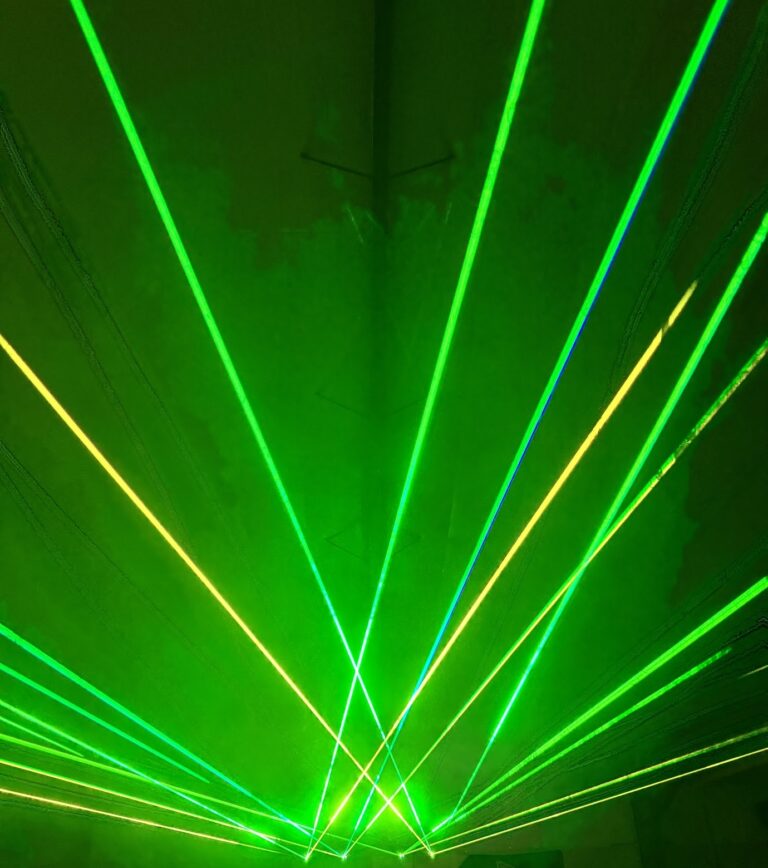
Professional Planning, Fire Safety, and Venue Coordination
Indoor atmospherics—such as haze, ground fog, and CO2/Cryo—can dramatically elevate an event when handled correctly. However, using these effects indoors requires planning, communication, and safety protocols. When done improperly, atmospherics can create issues with visibility, guest comfort, or fire alarm systems.
At Clik Entertainment and Massive Audio Visual, we approach indoor atmospherics the same way we approach audio, lighting, and rigging: professionally, responsibly, and in coordination with the venue.
Below are the key methods we use to safely and effectively deploy atmospherics indoors.
1. Venue Coordination Comes First
For any atmospheric effect, confirm:
- The type of fire detection system in place (particle vs. heat vs. aspirating)
Ceiling height and HVAC behavior
Airflow patterns and ventilation cycles
If this is a third-party venue, venue policies.
Many modern venues are designed to accommodate haze when used at controlled levels. It’s a standard effect. Older buildings may require additional precautions, such as a Fire Watch.
2. Appointing a Fire Watch (When Required)
In some venues—particularly older buildings or municipal / university facilities—atmospherics may require a fire watch.
A fire watch is:
A trained individual (often venue staff or fire personnel)
Assigned to visually monitor the space during effects usage
In direct communication with production and venue management
Authorized to immediately stop the event if necessary
This added layer of oversight allows atmospherics to be used safely and compliantly, even in more sensitive environments.
3. Controlled Output & Professional Equipment
One of the biggest differences between DJ-grade and professional production is control.
We use:
Professional hazers with fine particulate output
Adjustable density and timing
Continuous, low-level atmospheric layering (not bursts)
Equipment designed for concert and theatrical use
This allows us to:
Maintain consistent visibility
Avoid buildup
Reduce the likelihood of triggering particle detectors
Match output precisely to room size and ceiling height
Atmospherics should be felt, not noticed as a problem.
4. Timing & Cue-Based Usage
Not all atmospherics need to run continuously.
In many indoor environments, we deploy effects:
Only during key moments (openers, walk-ons, drops)
In short, intentional windows
In sync with lighting and music cues
For example:
CO2 is used momentarily and dissipates immediately
Ground fog is deployed for a specific reveal or dance
This minimizes risk while maximizing impact.
5. Leveraging HVAC & Airflow Intelligently
Every room behaves differently.
On-site, as a precaution, we assess:
Supply and return vent locations
Ceiling fans or air handlers
How air naturally moves once the room fills with guests
In some cases, simply adjusting:
Output direction
Machine placement
Timing relative to HVAC cycles
can make the difference between a flawless effect and an issue.